
Converting measurements in the laboratory is a fundamental skill that every scientist, student, or anyone working with precise liquid volumes must master. Whether you are measuring reagents for a chemical reaction, preparing solutions for biological experiments, or simply following a recipe that uses metric units, understanding how to switch seamlessly between centilitres and millilitres is essential. The metric system, which underpins scientific measurement worldwide, offers a logical and straightforward approach to these conversions. When you grasp the basic principles, transforming 20 centilitres into millilitres becomes second nature, ensuring accuracy and confidence in your work.
Understanding the Metric System: Centilitres and Millilitres Explained
The metric system is built on a foundation of simplicity and consistency, making it the preferred choice for scientific and technical applications across the globe. At its heart lies the litre, a standard unit of capacity that serves as the reference point for all related measurements. From the litre, smaller units are derived using prefixes that indicate fractions of the base unit. This logical structure means that once you understand the relationships between units, conversions become straightforward and intuitive.
The relationship between litres, centilitres, and millilitres
To appreciate the conversion process fully, it is important to understand how litres, centilitres, and millilitres relate to one another. A litre is the primary unit of volume in the metric system, and it represents a cube with sides of ten centimetres each. Within this framework, a centilitre is one-hundredth of a litre, while a millilitre is one-thousandth of a litre. This means that every single litre contains one hundred centilitres and one thousand millilitres. The beauty of this system is that each prefix tells you exactly how much of the base unit you are dealing with, removing any ambiguity.
When you consider the relationship between centilitres and millilitres specifically, the connection becomes even clearer. Since a litre contains one hundred centilitres and one thousand millilitres, it follows that each centilitre must equal ten millilitres. This tenfold relationship is the key to performing quick and accurate conversions in any setting, whether you are working in a laboratory, preparing ingredients for a culinary experiment, or measuring out medication doses with precision.
Why metric conversions matter in laboratory work
In scientific settings, accuracy is paramount. The difference between a successful experiment and a failed one can often come down to the precision of your measurements. Using the metric system allows researchers and technicians to communicate findings clearly and replicate experiments reliably. When protocols specify volumes in centilitres or millilitres, understanding how to convert between these units ensures that you follow instructions correctly and maintain the integrity of your work.
Beyond the laboratory, metric conversions play a vital role in healthcare, where medicine dosages must be measured with exacting precision to ensure patient safety. In the culinary world, European recipes frequently use centilitres and millilitres, and converting these measurements accurately can make the difference between a perfect dish and a disappointing outcome. The ability to move fluidly between units of capacity also enhances your overall numeracy skills, reinforcing your understanding of the decimal system and the power of metric prefixes.
The Simple Maths Behind Converting 20 cl to ml
Converting 20 centilitres into millilitres is a task that requires minimal effort once you understand the underlying principle. The process relies on recognising the tenfold relationship between these two units. Because one centilitre equals ten millilitres, any conversion from centilitres to millilitres involves multiplying the number of centilitres by ten. This straightforward operation is easy to perform mentally or with a calculator, making it an invaluable tool for anyone working with liquid volumes.
Step-by-step conversion method: multiplying by 10
To convert 20 centilitres into millilitres, you simply take the value in centilitres and multiply it by ten. In mathematical terms, this looks like 20 times 10, which gives you 200. Therefore, 20 centilitres is equal to 200 millilitres. This method works for any value you encounter, not just 20. Whether you need to convert five centilitres, which equals fifty millilitres, or thirty centilitres, which equals three hundred millilitres, the process remains consistent and reliable.
Another way to think about this conversion is to visualise moving the decimal point. When you multiply by ten, you effectively shift the decimal point one place to the right. For example, 20 centilitres can be written as 20.0 centilitres, and moving the decimal point one place to the right gives you 200.0 millilitres. This mental trick can be particularly helpful when you are working quickly and need to perform conversions on the fly without stopping to write out calculations.
Practical Applications in Scientific Measurements and Recipes
The ability to convert centilitres to millilitres extends far beyond abstract exercises in a textbook. In the laboratory, many reagents and solutions are stored in bottles labelled with volumes in centilitres, while experimental protocols may call for measurements in millilitres. Being able to switch between these units seamlessly ensures that you add the correct amounts to your reactions and avoid costly errors. For instance, if a procedure requires 200 millilitres of a buffer solution and your bottle is labelled in centilitres, knowing that you need 20 centilitres allows you to measure accurately.
In the culinary world, recipes from continental Europe often specify ingredient quantities in centilitres, particularly when dealing with liquids such as wine, spirits, or stock. A small glass of wine, for example, typically measures 12.5 centilitres, which translates to 125 millilitres, while a larger glass might be 17.5 centilitres or 175 millilitres. A standard wine bottle holds 75 centilitres, which is 750 millilitres. Understanding these conversions helps you follow recipes precisely and adjust serving sizes as needed. Similarly, when measuring out spirits for cocktails, centilitres are commonly used, and converting to millilitres ensures you pour the correct amounts.
Healthcare professionals also rely on accurate volume conversions when administering liquid medications. Dosages are often prescribed in millilitres, but some medical equipment or packaging may display volumes in centilitres. Ensuring that you convert correctly can be a matter of patient safety, underscoring the importance of mastering these simple yet critical calculations.
Quick reference guide for common laboratory volume conversions
Having a mental reference guide for common conversions can save time and reduce the risk of errors. While the principle of multiplying by ten is straightforward, familiarising yourself with frequently encountered values can speed up your workflow and boost your confidence in making measurements.
Converting various centilitre measurements to millilitres
A quick reference chart can be invaluable when you are working in a fast-paced environment. One centilitre equals ten millilitres, two centilitres equal twenty millilitres, and three centilitres equal thirty millilitres. As you continue, four centilitres convert to forty millilitres, five centilitres to fifty millilitres, and six centilitres to sixty millilitres. Seven centilitres become seventy millilitres, eight centilitres transform into eighty millilitres, and nine centilitres equal ninety millilitres. Finally, ten centilitres equate to one hundred millilitres. These conversions form a simple pattern that is easy to memorise and apply in real-world situations.
For larger volumes, the same principle holds. Twenty centilitres, as we have established, equal 200 millilitres, while thirty centilitres equal 300 millilitres. If you need to convert fifty centilitres, you multiply by ten to get 500 millilitres, and so on. This pattern extends indefinitely, making the metric system exceptionally versatile and user-friendly.
Tips for Accurate Measuring in Scientific and Culinary Settings
Accuracy in measurement goes beyond simply knowing how to convert units. It also involves using the right tools and techniques to ensure that your volumes are as precise as possible. In the laboratory, graduated cylinders, pipettes, and volumetric flasks are designed to deliver exact measurements in millilitres or centilitres. Always check the scale on your measuring equipment and read the meniscus at eye level to avoid parallax errors.
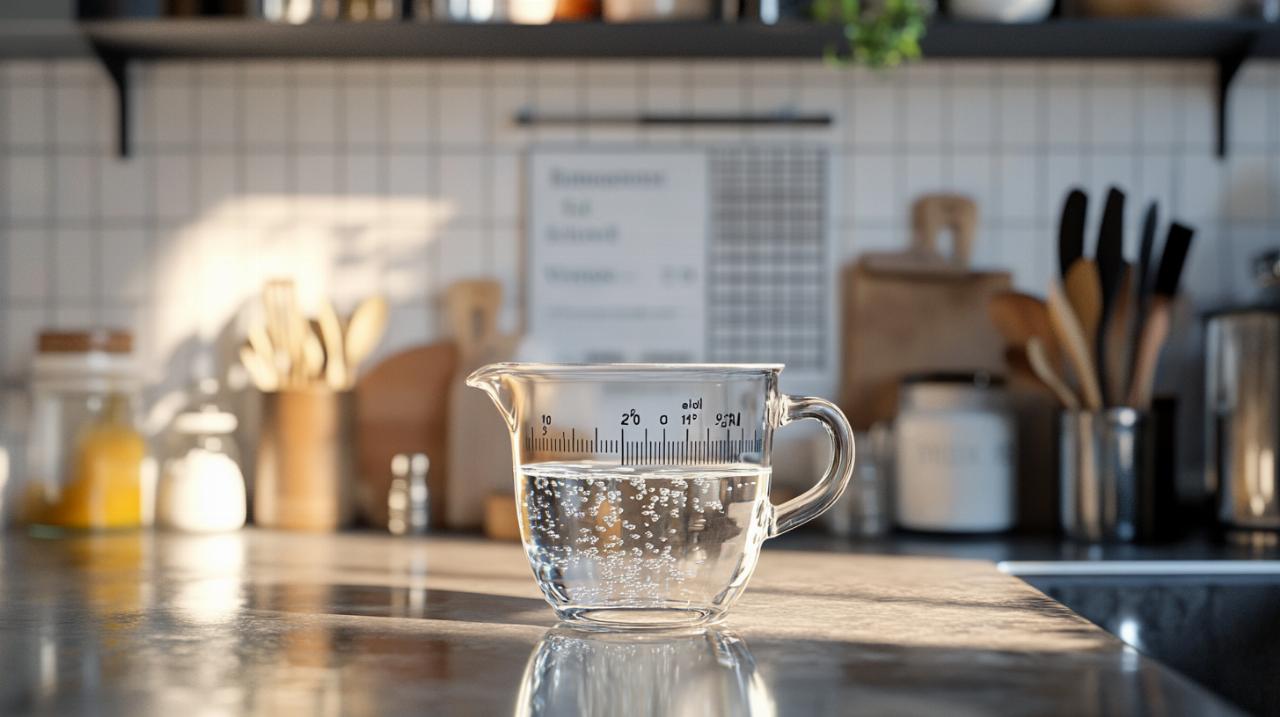
When working in the kitchen, using liquid measuring jugs with clear markings in both millilitres and centilitres can help you pour accurately. Take your time to fill the container to the correct level, and avoid estimating or guessing, as even small discrepancies can affect the outcome of a recipe. Practising these conversions regularly will help you become more comfortable and confident, whether you are measuring a few millilitres for a delicate sauce or several centilitres for a larger batch of stock.
Understanding metric prefixes is another valuable skill. The prefix milli indicates one-thousandth, while centi signifies one-hundredth. Keeping these definitions in mind reinforces your grasp of the relationships between units and makes conversions more intuitive. Over time, with repeated practice, you will find that converting between centilitres and millilitres becomes automatic, allowing you to focus on the more complex aspects of your work rather than getting bogged down in basic arithmetic.
In summary, converting 20 centilitres into millilitres is a simple matter of multiplying by ten, yielding 200 millilitres. This straightforward process is a cornerstone of working with metric measurements and applies equally to scientific research, healthcare, and culinary endeavours. By understanding the relationships between litres, centilitres, and millilitres, and by practising common conversions, you can ensure accuracy and efficiency in all your measuring tasks. The metric system's logical structure makes it an ideal choice for precise work, and mastering these conversions is an essential skill for anyone who values accuracy and clarity in their measurements.