

When pilgrims embark on the sacred journey of Hajj or Umrah, their voices rise in unison across the holy cities of Makkah and Madinah, proclaiming a phrase that has echoed through the ages since the time of Prophet Muhammad. This declaration, known as the Talbiya, serves as both a spiritual proclamation and a personal covenant with the Divine. The words Labayka Allahumma Labayk resonate not merely as a ritualistic formula but as a profound expression of devotion that encapsulates the very essence of Islamic worship and the relationship between the Creator and His creation. Understanding the depth of this recitation reveals layers of theological meaning that extend far beyond the physical acts of pilgrimage, touching the core of what it means to surrender completely to the will of Allah.
The Sacred Origins and Linguistic Dimensions of Labayka Allahumma Labayk
Tracing the Prophetic Tradition of the Talbiya
The Talbiya finds its roots firmly planted in the Sunnah of the Prophet Muhammad, who established this devotional prayer as an integral component of the pilgrimage experience. From the moment pilgrims enter the state of Ihram, that sacred condition of ritual consecration required for both Hajj and Umrah, they begin to recite this powerful declaration. The practice follows a specific pattern established by the Prophet himself, with men instructed to recite the words aloud whilst women are encouraged to recite them softly, demonstrating the nuanced application of this tradition across different circumstances. The recitation continues throughout the pilgrimage journey, filling the air with constant affirmations of presence and submission until pilgrims performing Hajj reach the stoning of Jamarah al-Aqaba on the tenth day of Dhul Hijjah, whilst those engaged in Umrah cease their recitation just before beginning the Tawaf. This continuous repetition serves not merely as a ritual obligation but as a living connection to the prophetic example, binding contemporary believers to a tradition that stretches back over fourteen centuries.
Unpacking the Arabic Etymology and Linguistic Nuances
The linguistic richness of the Talbiya reveals profound theological truths embedded within its carefully chosen words. The term Labbayk itself derives from a root that conveys the sense of answering a call with eagerness and readiness, repeated twice for emphasis and commitment. This doubling is not merely stylistic but carries significant weight in Arabic rhetoric, suggesting a response that is both immediate and enduring. The complete formula reads: Labbayka Allahumma labbayk, labbayka la sharika laka labbayk, inna al-hamda wa'l-ni'mata laka wa'l-mulk, la sharika lak, which translates to affirming that here the pilgrim stands at the service of Allah, who has no partner, and that all praise, blessings, and sovereignty belong to Him alone. Each component of this declaration carries layers of meaning that scholars have explored throughout Islamic history. The pauses recommended at four specific places within the recitation, following the Sunnah method, allow the speaker to contemplate each phrase, ensuring that the words are not merely uttered but truly felt and understood. The linguistic structure reinforces the central Islamic principle of Tawhid, weaving together affirmation of divine unity with personal commitment to service and obedience.
The Spiritual Covenant: Understanding 'Here I Am at Your Service' in Islamic Theology
The Divine Call and Human Response in the Talbiya
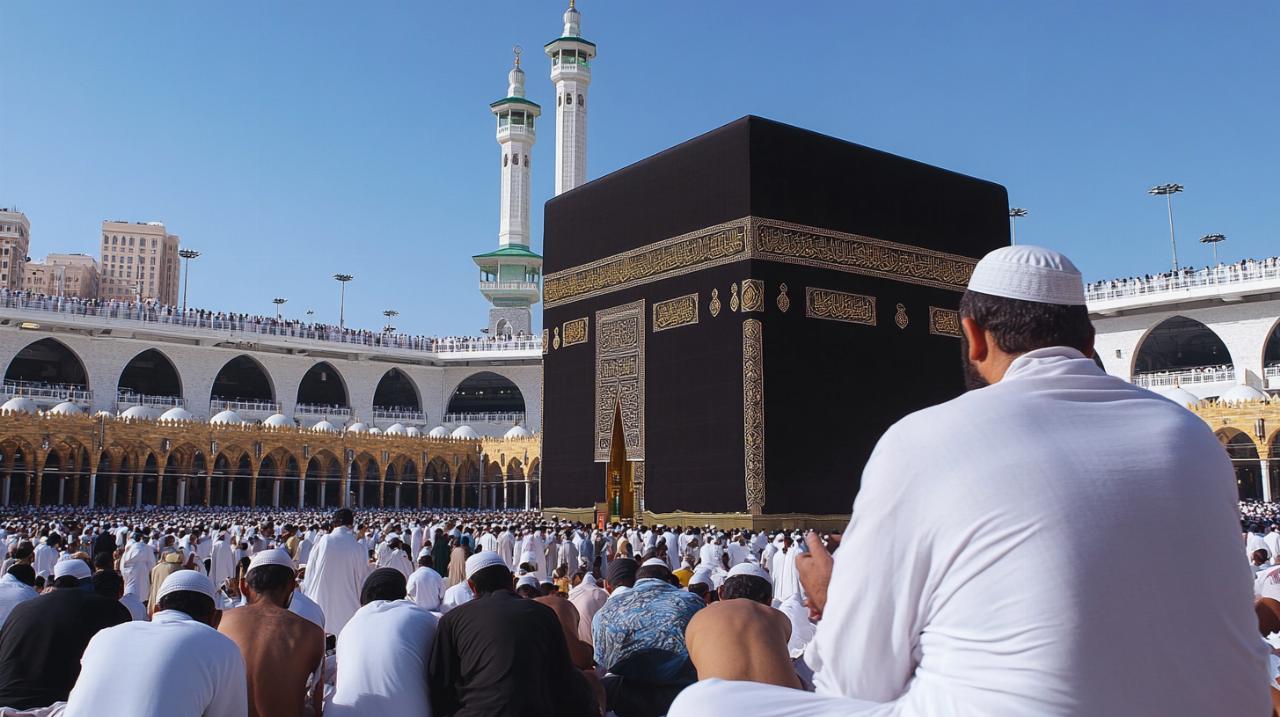
At the heart of the Talbiya lies a profound theological concept: the notion of divine calling and human response. When a believer proclaims Labbayka Allahumma labbayk, they are not initiating a conversation but rather responding to an invitation that Allah Himself has extended. This understanding transforms the pilgrimage from a mere physical journey into a spiritual dialogue between Creator and creation. The phrase encapsulates several dimensions of this response, including the act of submitting to Allah, persisting in obedience to His commands, confirming love for the Divine, expressing sincerity in worship, and drawing oneself closer to the source of all existence. These multiple layers of meaning indicate that the Talbiya is not a simple greeting but a comprehensive statement of one's relationship with God. The recitation serves as a constant reminder that the pilgrim has answered a call that echoes through the cosmos, a summons that connects them not only to the physical sanctuary of the Kaaba but to the eternal presence of the Divine. This response is both intimate and universal, personal yet shared with millions of believers throughout history who have stood in the same places and uttered the same words with hearts yearning for divine acceptance.
Surrender and Submission as Core Theological Principles
The act of reciting the Talbiya embodies the fundamental Islamic principle of submission, which is the very meaning of the word Islam itself. When pilgrims declare their presence at the service of Allah, they are actively engaging in a practice that strips away worldly pretensions and reduces the self to its most essential state: that of a servant before the Master. This submission is not passive resignation but an active choice, a deliberate turning away from all other allegiances and a wholehearted commitment to the Divine will. The theological significance of this cannot be overstated, as it represents the fulfilment of the purpose for which humanity was created. The declaration that Allah has no partner, repeated twice within the short formula, reinforces the absolute exclusivity of this devotion. It acknowledges that all praise, blessings, and sovereignty originate from and return to the One who has no equal or associate. This theological assertion stands at the very foundation of Islamic belief and practice, making the Talbiya not merely a pilgrim's chant but a condensed creed, a summary of faith articulated through the voice of one who has left behind the familiar comforts of home to answer a divine summons.
The Talbiya as a Living Expression of Tawhid and Worship
Monotheistic affirmation through the recitation
The Talbiya serves as a powerful symbol of Tawhid, the absolute Oneness of Allah, which stands as the cornerstone of Islamic theology. From the very moment a pilgrim enters the state of Ihram and begins the recitation, Hajj transforms into a living demonstration of monotheistic faith. The repeated affirmation that Allah has no partner resonates throughout the pilgrimage experience, creating a constant awareness of divine unity that permeates every action and intention. This declaration connects the individual pilgrim with the entire created order, all of which exists in a state of submission to its Creator. The recitation thus becomes a means of aligning oneself with the natural order of the universe, where everything from the celestial bodies to the smallest creatures functions according to divine will. Some scholars within various Islamic schools of thought consider the recitation of the Talbiya to be wajib, an essential component of the pilgrimage, whilst others regard it as a strongly recommended Sunnah practice. Regardless of the specific legal categorisation, the spiritual and theological importance remains undisputed. The act of reciting these words transforms ordinary moments into occasions of worship, whether one is walking between the hills of Safa and Marwa, resting in one's tent, or travelling between the sacred sites.
The Transformative Power of the Talbiya in Pilgrimage and Beyond
The profound impact of the Talbiya extends far beyond the physical boundaries of the pilgrimage sites and the temporal limits of the Hajj or Umrah period. When pilgrims recite these words as much as possible throughout their journey, in all conditions except during specific rituals such as Tawaf and Sa'i, they create a continuous state of remembrance and connection with the Divine. This constant repetition serves a transformative function, gradually reshaping the consciousness of the one who speaks these words. The recommendation to recite Salawat upon the Prophet and to make personal supplications after the first Talbiya demonstrates how this practice opens pathways for broader spiritual engagement and personal communication with Allah. The transformative power lies not only in what the words mean but in what they do to the heart that utters them sincerely. They cultivate humility, gratitude, and awareness of one's complete dependence on divine mercy and guidance. For many pilgrims, the memory of these words becomes a lifelong source of spiritual strength, a reminder of the covenant they made when they stood before their Creator in the sacred precincts of Makkah. The Talbiya thus becomes a bridge between the extraordinary experience of pilgrimage and the ordinary challenges of daily life, carrying forward the lessons of submission, sincerity, and devotion into every subsequent moment of existence.