

Finding the ideal electric scooter for under five hundred pounds requires balancing affordability with quality and performance. Urban commuters across the United Kingdom and Europe are increasingly turning to e-scooters as a practical and sustainable mode of transport, particularly for short city journeys. Today’s budget models no longer compromise on speed or distance, often delivering impressive capabilities without exceeding your spending limit. Understanding what to look for helps ensure you choose a model that fits your daily routine and commuting needs.
Essential Features to Consider When Selecting an Affordable E-Scooter
When evaluating electric scooters within this price bracket, certain core components demand attention. The motor, battery, braking system, frame construction, and tyre type all contribute to the overall experience and safety. Buyers often overlook how these features interact in real-world conditions, yet each element plays a vital role in reliability and comfort. a closer look at the options reveals that motor power typically ranges from three hundred and fifty to five hundred watts, sufficient for flat urban routes and gentle inclines. However, those living in hillier areas should prioritise models closer to the upper end of that range to avoid strain and sluggish acceleration. The folding mechanism also deserves scrutiny, especially if you intend to carry the scooter onto public transport or store it in compact spaces. A robust hinge that locks securely prevents wobbling and potential safety hazards. Equally important is the braking system, which should respond promptly in varied weather conditions common across British streets. Whether disc brakes or regenerative systems, ensuring they inspire confidence during sudden stops proves essential for peace of mind.
Battery Life and Range: What to Expect from Budget Models
Battery capacity directly influences how far you can travel before recharging becomes necessary. Many affordable scooters advertise ranges that sound generous, yet real-world performance often falls short due to factors such as rider weight, terrain, and weather. It is wise to expect roughly sixty to seventy per cent of the stated range under typical conditions. For instance, a scooter claiming forty kilometres might realistically deliver between twenty-five and thirty kilometres on a single charge. This adjustment in expectations prevents disappointment and helps you select a model with a buffer for your daily commute. Some models feature removable batteries, which add convenience by allowing you to charge the battery indoors without moving the entire scooter. This feature particularly benefits those living in flats or offices without outdoor power access. Additionally, consider how long the battery takes to recharge fully. Most budget options require between four and six hours, which fits comfortably into an overnight charging routine. Planning your trips around this timeframe ensures you are never caught with insufficient power halfway through your journey.
Build quality and weight capacity: ensuring durability within your budget
The frame and deck construction determine how well the scooter withstands daily use and varied rider weights. Aluminium alloy frames offer a favourable balance between strength and lightness, keeping the overall weight manageable while maintaining structural integrity. Deck size matters too, as a spacious platform provides stability and comfort, particularly on longer rides. Those weighing over one hundred kilograms should verify that the model supports higher weight limits and that the motor does not strain under heavier loads. Build quality extends to the folding hinge and handlebar stem, which must endure repeated folding without loosening or developing play. Checking user reviews often highlights any weaknesses in these areas before purchase. Tyre choice also impacts durability and ride comfort. Pneumatic tyres, ranging from eight and a half to ten inches, absorb shocks from uneven surfaces better than solid tyres, reducing vibration and fatigue. However, they require occasional maintenance to check pressure and inspect for punctures. Solid tyres eliminate this concern but sacrifice some cushioning, making them more suitable for smooth pavements. Understanding these trade-offs helps you select the most appropriate configuration for your typical routes and road conditions.
Top electric scooter models available under £500
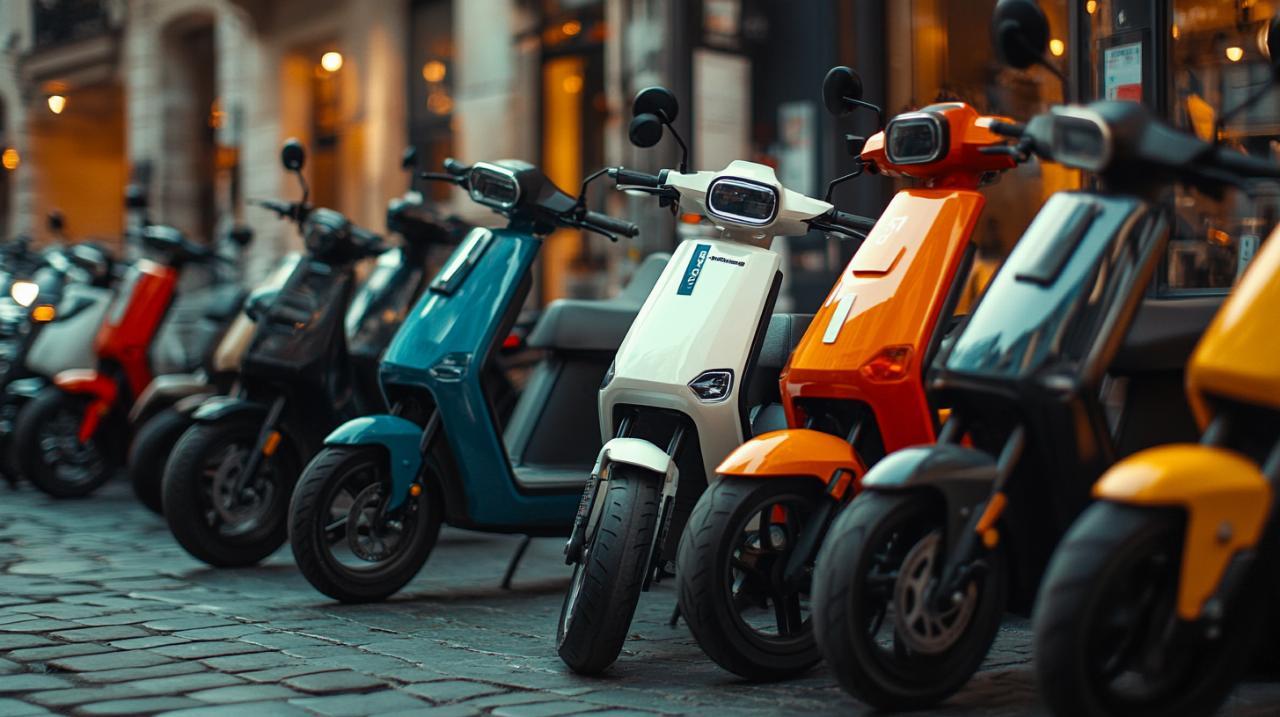
Several reputable brands have entered the affordable segment, offering models that deliver reliable performance without exceeding the budget. Among the most frequently recommended are the Segway Ninebot E2 Pro, Gotrax G4, NIU KQi2 Pro, and VMax VX5 Pro. Each brings distinct strengths, whether in range, acceleration, or portability. The Segway Ninebot E2 Pro, priced around four hundred pounds, combines brand reputation with solid specifications, making it a popular choice for first-time buyers. Meanwhile, the Gotrax G4 offers excellent value at approximately three hundred and eighteen pounds, appealing to those seeking basic functionality without unnecessary extras. The NIU KQi2 Pro stands out with its three hundred and fifty-watt motor, achieving speeds close to nineteen miles per hour and acceleration to fifteen miles per hour in under seven seconds. Its performance in urban settings has garnered positive feedback, particularly for its smooth handling and responsive braking. On the other hand, the VMax VX5 Pro pushes boundaries with a four hundred-watt motor, reaching nineteen miles per hour and delivering over twenty-three miles in real-world testing. This model suits commuters with longer daily distances or those who prefer fewer charging cycles each week.
Comparing popular brands and their specifications
When comparing models, it helps to assess each against key criteria such as motor power, battery range, weight, and folding ease. The KuKirin G2 Pro, priced at approximately four hundred and ninety-nine pounds, offers a top speed of forty-five kilometres per hour and a range of fifty-five kilometres, placing it at the higher end of budget options. Its sibling, the KuKirin G2, provides similar specifications at four hundred and eighty-nine pounds, while the KuKirin A1 reduces the price to four hundred and forty-nine pounds with a slightly shorter range of forty-five kilometres. For those prioritising cost-effectiveness, the KuKirin S1 Max at two hundred and seventy-nine pounds delivers twenty-five kilometres per hour and thirty-nine kilometres of range, ideal for short commutes. The iScooter range presents another compelling lineup. The i8, starting at one hundred and eighty-five pounds, offers a three hundred and fifty-watt motor with twelve miles of range and a top speed of fifteen and a half miles per hour. Stepping up, the i9 increases range to eighteen and a half miles and speed to eighteen and a half miles per hour for two hundred and nine pounds. The i9Max, at two hundred and ninety-nine pounds, features a five hundred-watt motor, nearly twenty-five miles of range, and twenty-one and a half miles per hour, representing a significant jump in capability. Higher-tier models such as the iX3, iX4, and iX5s push performance further, though they approach the five hundred-pound threshold. These options suit riders who require extra power for steep hills or prefer greater acceleration.
Real-world performance: user reviews and practical experiences
User feedback highlights that advertised specifications often differ from practical outcomes. Riders frequently note that weather conditions, rider weight, and road quality significantly affect battery life and top speed. Cold temperatures, for instance, reduce battery efficiency, shortening range by up to twenty per cent. Similarly, continuous acceleration and braking in stop-and-go traffic drain the battery faster than cruising at a steady pace. Reviews also emphasise the importance of pneumatic tyres for comfort, especially on routes with cobblestones or potholes. Solid tyres, while maintenance-free, transmit more vibration, leading to discomfort on longer journeys. Braking performance receives consistent attention in reviews, with disc brakes generally preferred for their reliability in wet conditions. Models equipped with dual braking systems, combining mechanical and electronic regenerative brakes, offer added confidence and help extend battery life by recapturing energy during deceleration. Portability remains a practical concern for many users. Scooters weighing between twelve and seventeen kilograms strike a balance, being light enough to carry short distances but sturdy enough to feel stable at speed. Folding mechanisms that engage quickly and securely prevent frustration during daily transitions between riding and carrying. Overall, the consensus among buyers is that affordable electric scooters have improved markedly, with many now offering features once reserved for premium models. However, setting realistic expectations about range and maintaining regular checks on tyres, brakes, and folding points ensure longevity and safe operation.